Best Countries for Bangladeshi Students to Study Abroad in 2026
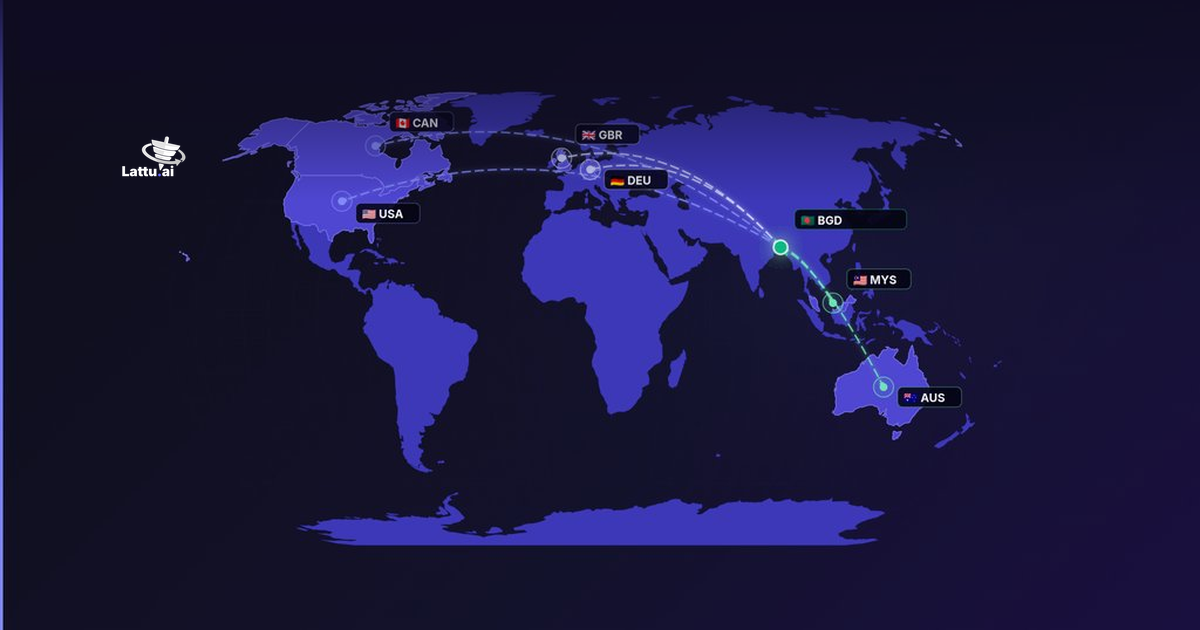
Picking the perfect country to study abroad isn't about looking at a single global ranking list. The right choice depends entirely on your specific budget, your academic grades, and what you want for your future career or immigration goals. To protect your family's savings from unexpected risks, you need to match your personal plans with the fast-changing visa rules across the globe.
- Look beyond tuition fees: Low-tuition destinations (like Germany) save you money on classes, but they still require a large amount of cash upfront in a blocked account. Always calculate the total cost of rent and food, not just university fees.
- Visa approvals are no longer automatic: Strict global immigration crackdowns mean you will face incredibly tough background and credibility checks. To pass, your bank records must be completely clean with absolutely no sudden cash deposits.
- Time equals money: Choosing a country with shorter degrees (like a one-year Master's in the UK) drastically cuts down your overall living expenses and gets you into the job market much faster.
- Match the country to your final goal: Look toward the US if you want massive research scholarships, Europe if you want a fully funded Master's degree without a PhD, and Canada or New Zealand if your primary goal is permanent residency.
- Watch out for hidden local costs: From Bangladesh, you must legally open a dedicated Student File to send money abroad. This process, combined with sudden shifts in the value of the Taka, can add significant unexpected expenses to your family's budget.
How We Compared These Countries
Evaluating international destinations requires an objective framework grounded in raw data rather than popular narratives found on social media platforms. The selection process filters destination metrics through the practical realities faced by self-funded or sponsored applicants from Bangladesh.
Five core pillars dictate the comparative weight of each destination:
Total Visualized Cost: The actual annual outlays, including tuition fees and official government cost-of-living metrics, converted to Bangladeshi Taka (BDT).
Language Prerequisites: The demand for localized language fluency versus standardized testing like the International English Language Testing System (IELTS).
Visa Acceptance Trends: Current approval patterns and financial document scrutiny standards enforced by respective regional visa offices.
Employment Regulations: Legal hourly limits placed on term-time work and the structural availability of post-graduation employment pathways.
Settlement Feasibility: The objective difficulty of transitioning from an academic permit to permanent residency (PR).
Country Comparison at a Glance
The following directory presents a data-driven overview of the primary academic destinations for the 2026 and 2027 intakes. The metrics assume a baseline exchange standard where 1 USD equals 120 BDT, 1 EUR equals 143 BDT, 1 GBP equals 153 BDT, 1 CAD equals 88 BDT, and 1 AUD equals 80 BDT.
Country-by-Country Breakdown
Germany
Germany stands out if you want a high-quality education without the burden of steep tuition fees. Public universities across fifteen of its sixteen states charge zero tuition for standard Bachelor’s and Master’s degrees. For your long-term returns, the nation provides extensive technical hubs and abundant career opportunities in STEM fields, all backed by a generous 18-month post-study work visa.
However, the financial reality requires careful preparation on your end. You must fund a mandatory blocked account with exactly €11,904 (approximately 1,547,000 BDT) upfront before your visa interview. On the lifestyle side, if you secure a local corporate role after graduation, you will enjoy excellent universal healthcare and robust labor protections. For instance, any employee holding a valid local contract gains access to Germany’s job-protected parental leave framework (Elternzeit), which legally binds employers to preserve your specific position for up to three years.
United Kingdom
The United Kingdom is a top choice if you want a respected degree without spending years in school. Its main appeal is fast-tracked programs, like one-year Master's and three-year Bachelor's degrees, which cut down your total living expenses. Its institutions, including the prestigious Russell Group universities, lead global rankings in business and law, while the paper-based visa system offers highly predictable processing times.
However, you must plan for steep annual tuition ranging from £14,000 to £26,000 (about 2,142,000 BDT to 3,978,000 BDT). To secure your visa, you must hold your first-year fees plus a nine-month living fund untouched in a bank account for 28 consecutive days. This baseline requires £1,171 per month outside London (~179,000 BDT) and £1,529 inside London (~234,000 BDT). You can work 20 hours weekly, but you cannot bring family dependents. Additionally, the post-study work window drops from two years to 18 months starting January 1, 2027.
Canada
Canada is an exceptional choice if your priority is a clear, structured pathway to permanent residency and long-term settlement. The primary benefit is how closely the country's high-ranking universities align with immigration point systems, which reward you for holding a local degree. Beyond great academic quality, many courses include co-op options that place you directly into corporate internships, allowing you to graduate with real Canadian work experience.
However, you must prepare for tight Post-Graduation Work Permit (PGWP) rules and rising costs. Annual tuition ranges from CAD 20,000 to CAD 40,000 (about 1,760,000 BDT to 3,520,000 BDT), and you must show a strict living deposit of CAD 20,635 (around 1,795,000 BDT) before your visa review. While you can work part-time up to 24 hours a week, strict caps mean you must secure a rare provincial attestation letter before filing a visa application. Furthermore, your post-graduation work permit is now tied to clear language test scores and specific job fields facing labor shortages.
Australia
Australia is an excellent fit whether you target elite Go8 unis or choose from your selection of other accredited universities with regional career advantages. The main appeal is extended post-study work visas up to four years if you live in designated regional zones. Beyond high global rankings in IT, business, and nursing, you enjoy a highly welcoming atmosphere and a transparent minimum wage framework that legally protects international enrollees.
However, the visa process requires a flawless financial profile. Under the strict Genuine Student system, unexplained large bank deposits will cause fast denials because officers closely audit your academic intent. You must prove liquid funds for first-year tuition plus a living benchmark of AUD 29,710 (around 2,376,000 BDT). While term-time work allows 48 hours per fortnight, high non-refundable visa fees of AUD 2,500 mean mistakes have heavy financial consequences.
United States
The United States is a premium choice if you want vast university options and massive career markets. While elite Ivy League schools command global fame, hundreds of accredited colleges offer top-ranked programs for specific fields. A major appeal lies in rigorous PhD tracks that can provide full funding and stipends. Your post-study return relies on the flexible Optional Practical Training (OPT) framework, letting you work up to three years with a STEM degree.
However, the US is the most expensive destination on your list. Master's scholarships are rare, and undergraduate and PhD admissions are highly selective with fiercely competitive funding. To secure your mandatory Form I-20, you must prove liquid funds covering the first year, with annual fees ranging from USD 25,000 to USD 70,000 (~3,000,000 to 8,640,000 BDT). You also face high insurance costs, strict 20-hour weekly on-campus work limits, and a competitive lottery for long-term visas.
Malaysia
Malaysia presents an excellent alternative for students seeking an affordable international degree close to Bangladesh. The country hosts several branch campuses of major British and Australian universities, allowing students to earn identical degrees at a fraction of the cost of living in Western capitals. The Education Malaysia Global Services (EMGS) portal provides a centralized digital gateway to manage university admissions and student pass processing smoothly.
However, you must budget carefully against strict work limits. Annual tuition averages RM 15,000 to RM 50,000 (around 425,000 BDT to 1,400,000 BDT), and your visa requires a bank proof of RM 30,000 (~850,000 BDT). While you enjoy low living costs and safety, part-time work is banned during term time; you can only work 20 hours weekly during holiday breaks. Post-graduation, a Graduate Pass lets you stay for 12 months to find a job, but long-term settlement requires a strict, employer-sponsored Employment Pass.
Financial and Lifestyle Pathways
Low budget / lowest cost option: Germany represents the absolute baseline for total cost because it does not charge tuition fees at public universities. For students who cannot show huge liquid balances beyond their living costs, it stands out as the most affordable destination, provided they can clear the blocked account hurdle. Malaysia serves as a close second for those who prefer an English-speaking environment without high fees.
English-speaking destination preferences: For applicants who want an exclusively English-speaking society without learning a second language, the United States, Canada, the United Kingdom, Ireland, Australia, New Zealand and Singapore remain the standard choices. These locations require prioritizing academic preparation for high IELTS bands or similar testing tracks.
Best visa approval probability metrics: Although the UK and Malaysia use clear paperwork rules, a massive student visa crackdown targeting South Asia means approvals are no longer automatic. As a result, authorities are now enforcing strict credibility checks. Across these popular destinations and mainland Europe, you will now face stricter verification of educational documents, shorter grace periods after graduation, and the Entry/Exit System (EES), which is designed to catch anyone using a study visa as a backdoor to work. To get approved, you must pass these tough interviews and prove your genuine intent with clean bank records and absolutely no sudden cash deposits.
Shorter master’s route availability: The United Kingdom is the top option for an accelerated postgraduate journey. Its 12-month taught master's tracks minimize living costs and allow students to re-enter the workforce quickly.
Best Options for Your Educational Background
STEM and Research
If you want a strong science, technology, engineering, or math program, the US and Germany are your best choices. US universities have massive budgets, meaning you can easily find research assistant roles that help pay for your degree. Germany gives you incredible hands-on links to major industries like cars and machinery through its technical universities.
Business
If you are studying finance, management, or international business, look at the UK and Australia. Studying in London gives you direct networking access to major global companies. Australian business schools offer great modern programs that focus heavily on trade in the Asia-Pacific region.
Medical Fields
Becoming a practicing doctor in Western countries involves massive licensing hurdles and extreme costs. If you want a more affordable path, Malaysia and Eastern Europe offer recognized medical degrees. However, if your goal is medical research rather than clinical practice, the UK and US have excellent corporate labs.
Arts and Humanities
For fields like literature, history, or media studies, the UK and US are excellent choices. You will benefit from massive libraries, creative grants, and cultural hubs in major cities.
Funding and Location Profiles
Best for Scholarships: The US leads in offering full funding through fee waivers and teaching jobs. Germany offers a different kind of help by keeping its public university tuition free for all international students.
Working While Studying: Australia lets you work up to 48 hours every two weeks during the semester, while the UK lets you work up to 20 hours a week. You can work unlimited hours during official holidays in both countries. However, you should only use part-time money for extra pocket expenses, not to pay your core tuition.
Post-Study Work Tracks: The US technically has a three-year work window for STEM graduates, but strict rules, short grace periods, and heavy employer audits make it very tough for new students. Australia is much more stable, offering multi-year work rights specifically designed to keep talent in regional areas facing job shortages.
Best Path to Permanent Residency (PR): Canada has historically offered the most direct path to PR through its point system. However, you now need top language scores, a specific job specialization, and local work experience to qualify.
Closer to Bangladesh: Malaysia is only a three-hour flight from Dhaka, sharing similar cultural spaces and offering simple entry rules. Singapore offers world-class schools, and Thailand is highly affordable and welcoming. Just keep in mind that Malaysia, Singapore, and Thailand do not give you a direct path to permanent residency. To stay after graduation, you must win a highly competitive work visa through an employer.
Family Comfort Factors: If you want to move with a partner or children, New Zealand is a fantastic choice because masters and PhD students get full working rights for spouses and domestic school rates for children, leading to clear PR paths. Australia also offers good family visa options, though you must show extra savings for school fees. The UK is very strict, only allowing family members if you are doing a research-based postgraduate degree. Japan is also tough, capping a spouse's work at 28 hours a week and requiring high-level language skills for permanent residency.
Critical Details You Must Know Before You Choose
Document Mistakes
You must ensure that your name spellings and birth dates on your SSC and HSC or O-Level and A-Level certificates match your passport exactly. Even a tiny mistake will cause universities or visa offices to reject your application immediately.
Student File Costs in Bangladesh
To legally send money abroad for tuition and living costs, you must open a special Student File at a commercial bank in Bangladesh. This comes with recurring costs:
An initial setup fee between BDT 5,000 and BDT 8,600 (plus 15% VAT).
An annual renewal fee between BDT 4,500 and BDT 7,500.
Bank transfer and SWIFT fees every single semester.
Always compare the official fees at different banks before you open your file.
Financial Proof Checks
Western visa offices check your family bank history very closely. If you dump a massive amount of sudden cash into your sponsor's account right before applying, they will flag it as borrowed money and deny your visa. You must show exactly where the money came from, such as salary taxes, business dividends, or property sales.
Language Barriers
If you pick a non-English country like Germany to save on tuition, you must commit to learning the language. Relying only on English for daily life or jobs is a major mistake. To get a part-time job or truly fit in, you need to speak the local language.
Exchange-Rate Risks
Global currency shifts can heavily damage your budget. If the转换 Bangladeshi Taka drops by 10%, your tuition and living costs instantly go up by hundreds of thousands of taka. Your family must keep an extra financial cushion so you do not run out of money mid-semester.
Common Mistakes to Avoid
Counting on part-time jobs: Assuming your part-time wages will cover all your tuition and rent is highly dangerous. Balancing heavy classes with long shifts can quickly ruin your grades.
Forgetting local living costs: Budgeting only for tuition while ignoring the high cost of rent, food, and mandatory health insurance will leave you in financial trouble.
Using old residency advice: Never pick a country based on PR rules from a few years ago. Immigration laws change rapidly, and you need to track real-time changes.
How You Can Use Lattu AI to Pick Your Study Destination
Lattu AI's Country Explorer compares study destinations by tuition cost, post-study work rights, and more, filtered for Bangladeshi students.
Verification Disclaimer: Immigration policies, financial proof rules, and university entry standards change frequently. Students must double-check all critical data against official government web portals and direct university communications before committing any family capital.
Written by
Edited by
Lamisa Saba
Related Articles
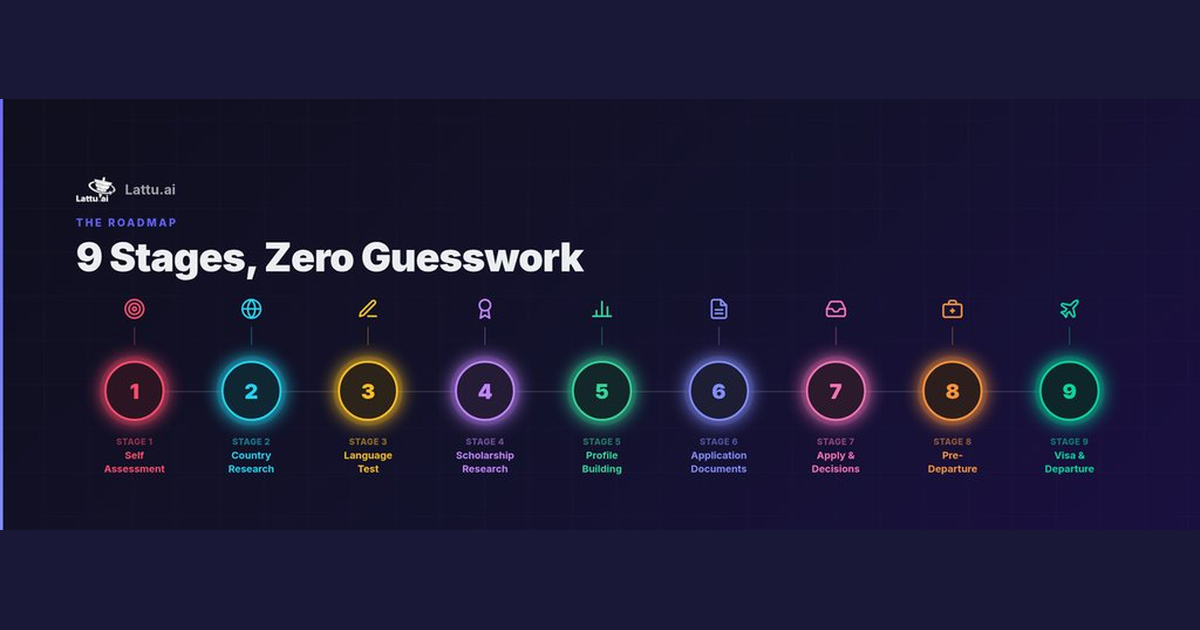
How to Plan Your Study Abroad Journey: A Step-by-Step Roadmap (2026)
To plan your study abroad journey from Bangladesh, you must follow a strict, sequential roadmap over 12 to 18 months to complete local document verification and clear embassy backlogs. Treating this timeline like a last-minute sprint is the
 Lamisa Saba


Study Abroad from Bangladesh: Complete Guide
This 2026 complete guide breaks down every step of the study abroad process for Bangladeshi students, from self-assessment and university research to visa applications and pre-travel preparation. It also includes clear cost breakdowns for top global destinations to help with financial planning.
Lamisa Saba
How to Choose the Right Country for Higher Studies from Bangladesh
To find the right country to study abroad, you must first create a list of priorities for your career plan, budget, and educational background before looking at destination popularity. This guide gives you a step-by-step system to filter ou
Lamisa SabaStay updated
Get new articles and scholarship alerts straight to your inbox.