How to Plan Your Study Abroad Journey: A Step-by-Step Roadmap (2026)
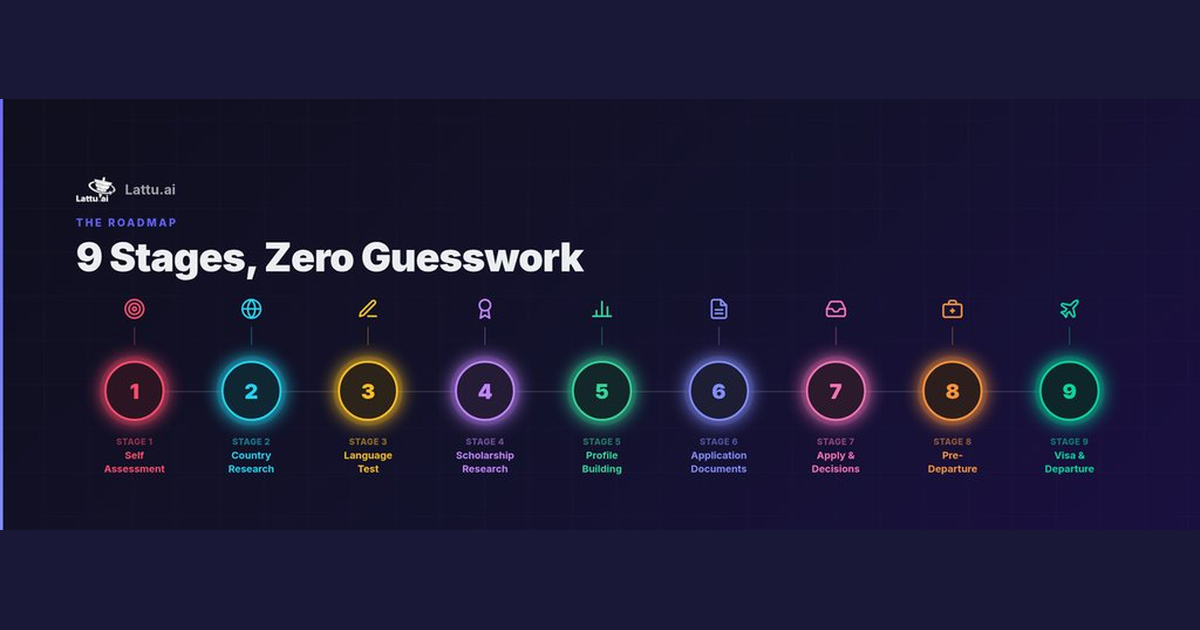
To plan your study abroad journey from Bangladesh, you must follow a strict, sequential roadmap over 12 to 18 months to complete local document verification and clear embassy backlogs. Treating this timeline like a last-minute sprint is the single biggest mistake, as mismanaged documentation will stall your application at the visa gate.
- 12–18 Month Start: Begin early due to local embassy and document verification queues.
- Sequence Matters: Fix financial proofs and passport data before sitting for exams.
- Budget Upfront: Allocation for non-refundable planning fees is required in BDT.
- Self-Reliance: Direct portal research avoids outdated third-party errors.
Before You Start: Three Questions to Answer First
An execution plan cannot function without a baseline definition of parameters. Before shortlisting specific institutions, the applicant and their supporting family must evaluate three fundamental decisions concurrently.
What level of study are you planning?
The academic pathways for undergraduate applicants (post-HSC or A-Levels) and graduate seekers (Master’s or PhD candidates) differ significantly in requirements. Undergraduate admissions focus heavily on board exam equivalence, extracurricular activities, and standardized test scores such as the SAT or ACT. Graduate programs, conversely, require extensive reviews of your undergraduate CGPA, transcripts, Letters of Recommendations, thesis or writing samples, formal research proposals, publications, and graduate-level standardized test scores such as the GRE or GMAT. While both pathways require essays such as a Statement of Purpose (SOP) or a personal statement, their overall focus and writing styles differ substantially.
What is your realistic timeline?
Global universities operate on strict intake calendars. The major semesters are Fall (typically commencing August or September) and Spring (commencing January or February). Because processing document verifications, passport alignment, and visa scheduling inside Bangladesh routinely requires several months, an applicant aiming for a September intake must finalize their baseline strategy by June of the preceding year.
What is your funding situation?
Higher education financing must be addressed transparently from the outset. Self-funding requires the immediate calculation of liquid assets available in the immediate family's bank accounts. Conversely, pursuing partial or fully funded scholarships entails much earlier, highly rigid application deadlines. Identifying whether a family can bear the full tuition burden or if success rests entirely on external scholarships/grants or student loans dictates which global destinations remain viable options.
The Study Abroad Planning Roadmap
The execution path consists of sequential phases. Shifting the order of these steps unnecessarily increases financial risk and creates unnecessary stress.[Phase Foundation] ──> [Phase 2: Preparation] ──> [Phase 3: E
Step 1: Self-assessment (Define goals, timeline, level, countries, funding)
The initial month must be dedicated to establishing concrete boundaries. Rather than selecting an institution based on casual anecdotes, map your raw metrics against global baseline requirements to build a realistic application profile. Create a personal assessment dossier by structuring your data into these key evaluation areas:
Academic Limits & Testing: Gauge your academic eligibility by cross-checking your current CGPA against the minimum requirements of your target programs. Determine the exact standardized test scores required and evaluate your ability to set a viable, structured timeline to achieve them.
Geographic & Career Preferences: Decide clearly whether your goal is to return to Bangladesh immediately after graduation or settle abroad permanently. This decision directly shapes your short-term and long-term preferences and post-study visa planning.
Financial Capability & Sourcing: Document the absolute maximum annual financial capability of your family sponsor in BDT to filter realistic academic choices. Determine early on whether you need to apply for external funding or are open to taking student loans.
Step 2: Country & university research (Shortlist countries and programs)
With self-assessments established, filter global options down to two or three target countries based on geographic factors like weather conditions, post-study opportunities, and local lifestyle. Next, shortlist universities using the following metrics:
Prestige & Rankings: Look at both overall institutional standing and specific subject rankings for your chosen field.
Faculty & Resources: Identify specific professors, research areas, or lab resources that match your academic interests and career aspirations.
Funding Opportunities: Check internal scholarship options, including university-specific grants and tuition fee waivers.
Once shortlisting is complete, research each institution's portal directly to verify program modules, career outcomes, and specific entry requirements, such as prerequisite coursework or writing samples. Finally, avoid considering hundreds of options; compile a highly focused list of the number of institutions you can realistically apply to within your capacity. Aiming for roughly 5 to 12 universities at most keeps the process manageable, helping you avoid burnout while ensuring the highest quality for each application portfolio.
Step 3: Estimate total cost
Calculate the total financial exposure by dividing the items into upfront preparation expenses and long-term overseas maintenance fees. This overview must factor in application costs, living stipends, health insurance premiums, and fluctuating currency valuation margins.
Step 4: Prepare for tests & documents
Register for necessary language evaluations, such as the International English Language Testing System (IELTS), and standardized examinations if required. Concurrently, initiate the process of gathering academic records. All secondary and post-secondary certificates must match the exact spelling listed on the applicant’s international passport. Any discrepancies must be rectified via the respective education boards before advancing.
Step 5: Apply for scholarships & funding
For students seeking external financial support, this window is critical. Major external scholarships and fellowships, as well as some university-specific merit grants, typically close their application portals before standard admission deadlines. Many funding options have strict eligibility criteria; for example, some awards require a minimum threshold of relevant professional experience, while others require a formal university admission offer letter. Therefore, it is important to browse and filter viable funding options before compiling application portfolios and unique funding essays to meet these early deadlines.
Step 6: Apply to universities
Submit completed application portfolios through official university admission portals. Ensure that every required element, including scanned transcript sets, copies of the statement of purpose, and academic references, is compiled carefully according to each institution's exact digital specifications. Track submission confirmation codes and processing timelines diligently.
Step 7: Complete admission & prepare for visa documents
Upon receiving a positive admission offer, review the specific terms of acceptance. Securing the official confirmation paperwork (such as an Electronic Confirmation of Enrolment or a Certificate of Acceptance for Studies) usually requires paying an initial tuition deposit. Simultaneously, organize the sponsor's financial profile. Bank accounts used for visa purposes must show stable, clear histories that precisely comply with the destination embassy's source-of-funds rules.
Step 8: Apply for visa
Compile the complete physical and digital visa application packet, incorporating the official university acceptance letter, confirmed financial clearance proofs, police clearance certificates, and medical exam reports where applicable. Book the visa interview or biometric appointment at the relevant embassy or authorized application center in Dhaka well in advance to avoid peak seasonal backlogs.
Step 9: Prepare for travel and student life
Once the student visa sticker is successfully secured, finalize international travel arrangements. Coordinate student housing options, complete mandatory pre-departure healthcare checks, and arrange foreign currency exchange or international student travel cards to manage initial ground expenses upon arrival.
Bangladesh-Specific Things to Know
Navigating this path from Bangladesh requires addressing specific regional procedural steps:
Passport Validity: Ensure the booklet retains at least 18 to 24 months of validity before submitting university papers. Minor typos or structural name variations across national identity documents and academic boards must be corrected immediately.
Embassy Jurisdictions: Several European destinations do not maintain full consular processing operations inside Dhaka. Applicants targeting nations like Spain, Italy, or specific Scandinavian states may need to coordinate travel to regional consular hubs in New Delhi, India, to submit physical biometrics, adding significant time and travel cost overheads to the roadmap.
Financial Proof Audits: Global immigration authorities carefully review bank statements submitted by Bangladeshi sponsors. The funds must sit in stable, transparent personal accounts with verifiable tax profiles, source documentation, and clear audit histories. Attempting to deposit large, unexplained sums right before printing statements triggers immediate visa rejections.
How Lattu.ai Can Help
Lattu.ai handles the heavy lifting of study abroad planning by providing a clear, step-by-step roadmap tailored to academic backgrounds, preferences, and budgets, making applicants’ journeys easier and more efficient.
Written by
Related Articles

Study Abroad from Bangladesh: Complete Guide
This 2026 complete guide breaks down every step of the study abroad process for Bangladeshi students, from self-assessment and university research to visa applications and pre-travel preparation. It also includes clear cost breakdowns for top global destinations to help with financial planning.
 Lamisa Saba


How to Choose the Right Country for Higher Studies from Bangladesh
To find the right country to study abroad, you must first create a list of priorities for your career plan, budget, and educational background before looking at destination popularity. This guide gives you a step-by-step system to filter ou
Lamisa Saba
Best Countries for Bangladeshi Students to Study Abroad in 2026
Picking the perfect country to study abroad isn't about looking at a single global ranking list. The right choice depends entirely on your specific budget, your academic grades, and what you want for your future career or immigration goals.
Lamisa SabaStay updated
Get new articles and scholarship alerts straight to your inbox.