Lattu AI

Plan where you study, what it costs and what you need, in one place.

Get it onGoogle Play

Platform

Journey PlannerCountry ExplorerScholarship Hub

Company

About UsHow It WorksContactCareersPress

Resources

Why LattuResource CenterBlogNewsFAQMedia Kit

Programs

Lattu Launchpad GrantAmbassador Program (Coming Soon)
© Xephyr Labs 2026Privacy PolicyTerms of Service
Back to Explorer
the United States flagCountry Guide

Study, work, or settle in the United States
from Bangladesh

Thinking about studying, working or settling in the United States? Here's what you need to know before applying.

Compare with another country
the United States study

Study in

the United States

General

  • Student Visa (Tier 4) required
  • World’s top destination for higher education and research
  • Home to Ivy League and top STEM/business universities
  • 3-year undergrad programs; 1-year masters common
  • Flexible education system with strong industry links
  • Vibrant culture & history

High level Process

  • Choose university & program
  • Take required tests (SAT/ACT/GRE, IELTS/TOEFL)
  • Apply and receive I-20
  • Pay SEVIS fee
  • Apply for F-1 student visa
  • Enter U.S. and enroll
  • Work part-time on campus → OPT after graduation

Tips

  • Target scholarships, assistantships, and funded programs
  • Choose STEM fields for longer OPT (3 years)
  • Apply early for I-20 & visa slots
  • Strong financial documentation
  • Compare scholarship/assistantship options
  • Build internships early for H-1B sponsorship

Costs

  • Tuition: $20,000–60,000/year
  • Living: $12,000–25,000/year
  • Visa: $160 + SEVIS $350
  • Health insurance: $1,500–3,000/year
  • Visa + SEVIS: ~$500

Admissions at a glance

Browse universities in United States of America →
Universities
3,232
with a profile on Lattu
Median admit rate · Undergraduate
76%
1,676 universities, latest year to 2023
Median admit rate · Master's
44%
19 universities, latest year to 2025
Median admit rate · PhD
12%
20 universities, latest year to 2025
Teach in English
100%
of 2,265 researched universities
Typical cost of living
1,574 USD
per month, median of 1,777 universities
Typical IELTS minimum · Undergraduate
6.0
median of 1,132 published minimums
Typical IELTS minimum · Master's
6.5
median of 937 published minimums
Typical IELTS minimum · PhD
6.5
median of 555 published minimums

Admit rates: University graduate admissions statistics (US) (offers / applications); IPEDS Admissions (US) (admissions / applications, first-time undergraduates). Cost of living and teaching languages are researched, unverified.

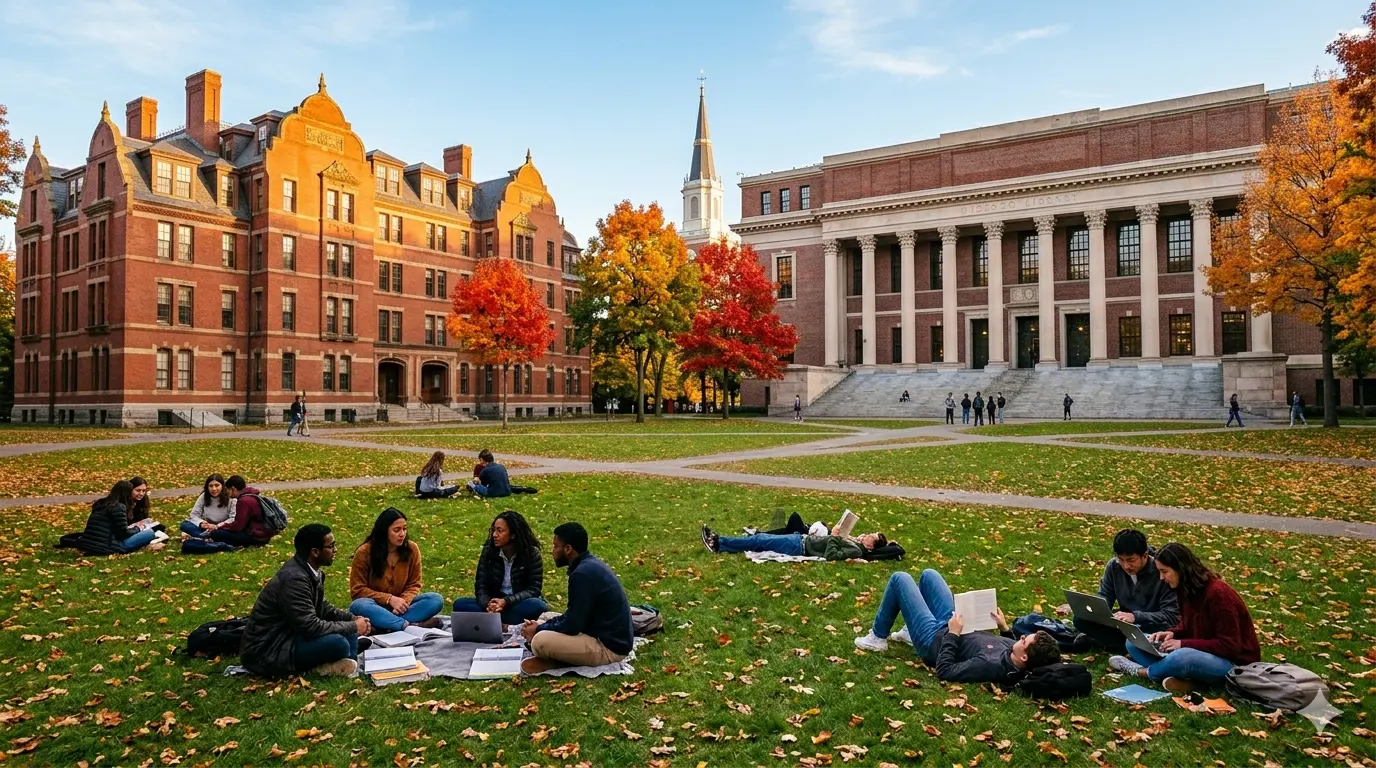
Study in the United States

The United States is one of the most popular study destinations in the world, hosting over a million international students each year. It is home to many of the world's top-ranked universities, cutting-edge research institutions, and a highly flexible education system. From Ivy League schools like Harvard and Yale to strong public universities such as UCLA, University of Michigan, and Georgia Tech, the U.S. offers diverse academic environments, programs, and career pathways.

Benefits

World-Class Education & Research: The U.S. leads in innovation, technology, medicine, business, and social sciences. Students gain access to advanced laboratories, funding opportunities, interdisciplinary programs, and renowned professors. Degrees from U.S. institutions are globally recognized and often highly valued by employers.

Flexibility in Academic Programs: Unlike many countries, U.S. universities allow students to change majors, combine disciplines, and explore courses before specializing. This is especially beneficial for students still refining their career goals.

Career Opportunities & Networking: Internships, on-campus jobs, research assistantships, and strong industry ties allow students to build professional experience during study. Programs like OPT (Optional Practical Training) and STEM OPT extension enable graduates to work in the U.S. for up to three years.

Cultural Diversity: The U.S. is extremely multicultural. Students interact with people from all over the world, improving global awareness, communication skills, and cultural adaptability.


Costs

Tuition & Living Expenses: The biggest drawback is cost. Tuition can range from $20,000 to $60,000 per year, and living expenses run $12,000–25,000 per year depending on the city, highest in places like New York, Boston, and San Francisco.

Health Insurance: International students must purchase mandatory health insurance, which can cost $1,500–$3,000 annually.

Opportunities

Post-Study Employment & Immigration Pathways: Students in STEM fields have strong chances of employment through OPT and H-1B sponsorship. Many later transition to permanent residency via employer sponsorship, research positions, or exceptional ability categories.

Entrepreneurship & Innovation: The U.S. startup ecosystem, especially in Silicon Valley, Boston, and Austin, offers unmatched opportunities for students interested in entrepreneurship, venture capital, and tech innovation.

Risks & Considerations

Visa Uncertainty: Student visas (F-1) and work visas are subject to policy changes and lottery systems, creating uncertainty for long-term plans.

Academic Pressure & Mental Health: The competitive environment, cultural adjustment, and financial stress can affect student well-being if support systems are lacking.

Overall Assessment

Studying in the United States offers unmatched academic quality, research exposure, and career-building opportunities. However, high costs and immigration uncertainty make it a high-reward but high-risk investment. For students aiming for global careers in technology, research, business, or academia, the U.S. remains one of the most powerful launchpads in the world.

Plan your journey with Lattu AI

Knowing the country is just the first step. Lattu AI helps you build a complete, personalised plan — from choosing the right program and university to understanding visa steps, costs, and timelines.

Plan your journey with Lattu AI